

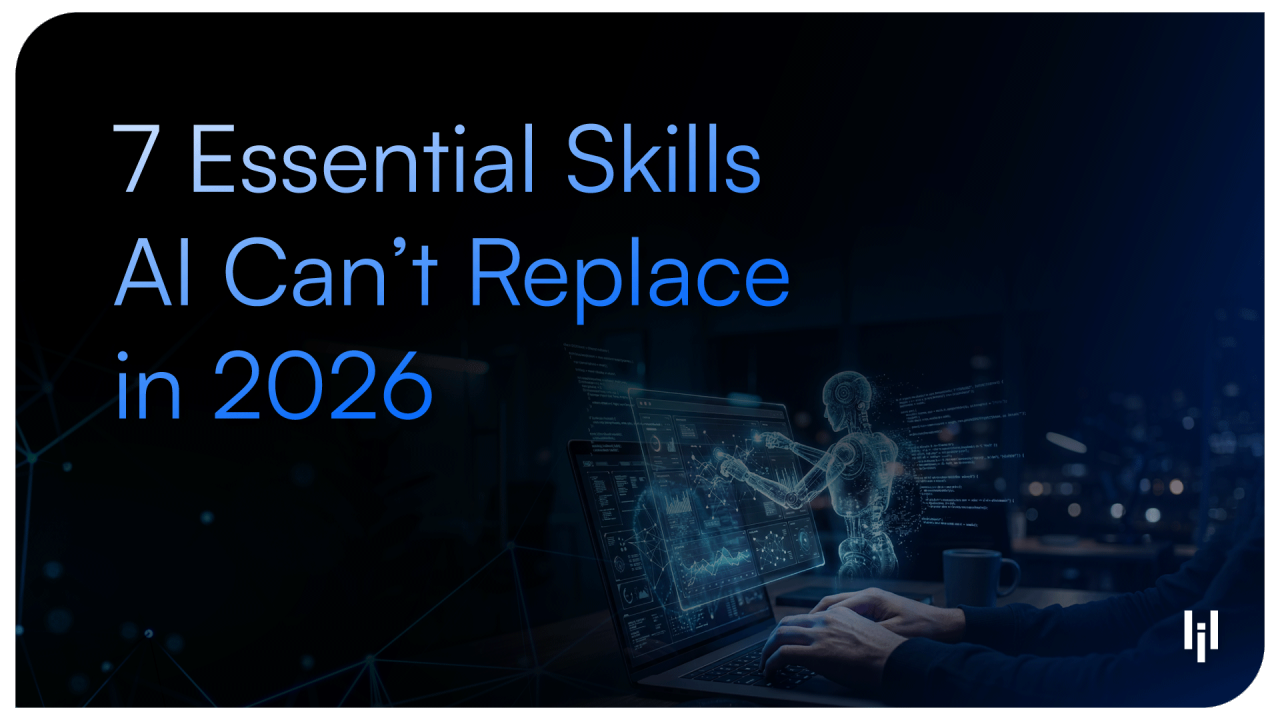
7 Graphic Design Skills AI Still Can't Replace in 2026
Artificial intelligence has changed the graphic design industry faster than almost anyone expected.
Today, AI tools can generate logos, social media posts, illustrations, product images, presentations, website layouts, and marketing visuals within seconds. A task that previously required hours of work can now sometimes be completed in minutes.
This has created an important question for designers:
Will AI eventually replace graphic designers?
The answer is more complicated than a simple yes or no.
AI is becoming extremely good at generating visuals, following instructions, and speeding up repetitive tasks. However, graphic design is not only about making something look attractive.
Good design requires understanding people, businesses, emotions, culture, communication, and strategy.
Here are seven important graphic design skills that AI still cannot fully replace in 2026.
1. Understanding a Brand Beyond Its Visual Style
AI can generate a logo or social media post based on a prompt.
However, understanding a brand is much deeper than selecting colors and fonts.
A professional designer needs to understand questions such as:
- Who is the target audience?
- What problem does the business solve?
- How should customers feel when they interact with the brand?
- What makes the company different from its competitors?
- What visual personality should the brand communicate?
For example, two companies may both sell coffee.
One may target young professionals who want a premium experience. Another may focus on affordability and convenience.
Both businesses sell a similar product, but their branding strategy should be completely different.
AI can generate visuals based on instructions, but a human designer is still responsible for asking the right questions and turning business goals into a meaningful visual system.
2. Creative Direction and Original Thinking
One of the biggest weaknesses of AI-generated design is that it often depends on patterns that already exist.
AI can combine ideas, styles, layouts, and visual references extremely quickly. However, generating something truly original requires more than combining existing patterns.
Creative direction involves deciding:
- What idea should lead the campaign?
- What message should the audience remember?
- What visual concept best represents the brand?
- Which ideas should be rejected?
- How can a familiar concept be presented in a new way?
A strong designer does not simply create multiple design options.
They develop a reason behind the design.
For example, a campaign may use a specific visual metaphor, storytelling approach, or emotional trigger that connects directly with the audience.
AI can assist during brainstorming, but human creative direction remains essential.
3. Understanding Human Emotion
Design influences how people feel.
A healthcare website should feel trustworthy and reassuring. A luxury brand may need to feel exclusive and sophisticated. A children's product may need to feel playful and energetic.
Choosing the correct visual direction requires emotional judgment.
This includes understanding:
- Color psychology
- Cultural context
- Audience expectations
- Emotional reactions
- Brand personality
AI can suggest colors and styles, but it does not experience emotions in the same way humans do.
A professional designer can recognize when a design technically looks good but emotionally feels wrong for the audience.
That type of judgment is still one of the most valuable human skills in design.
4. Solving Complex Design Problems
Real-world design projects are rarely simple.
Clients may provide unclear requirements. Different stakeholders may have different opinions. Business goals may change during the project.
A designer often needs to take a vague request and turn it into a clear solution.
For example, a client may say:
"We want our website to look modern."
But what does "modern" actually mean?
A professional designer needs to investigate further.
Does the client want:
- A cleaner interface?
- Better usability?
- A younger audience?
- Higher conversion rates?
- A stronger brand identity?
AI can generate a design after receiving clear instructions.
However, identifying the actual problem and defining the right solution still requires human thinking and communication.
5. Communication With Clients and Teams
Designers do much more than create visuals.
They communicate with clients, developers, marketers, product managers, and other stakeholders.
A strong designer needs to explain:
- Why a design decision was made
- Why one concept is stronger than another
- How users may interact with a product
- What technical limitations should be considered
- How design decisions support business goals
AI can help prepare explanations or documentation.
However, managing conversations, understanding stakeholder concerns, handling feedback, and building trust are human skills.
The ability to communicate clearly may become even more valuable as AI handles more of the production work.
6. Strategic Thinking
The difference between an average designer and a valuable designer is often strategy.
Anyone can create a visually attractive poster.
But a strategic designer asks:
What should this design achieve?
Should it generate sales?
Increase sign-ups?
Build trust?
Improve usability?
Explain a complicated product?
A design should not exist only to look good.
It should support a specific goal.
AI can generate hundreds of design variations, but someone still needs to decide which direction supports the business strategy.
That responsibility requires human judgment.
7. Knowing What Should Not Be Designed
One of the most underrated design skills is knowing when to stop.
AI can generate endless variations.
However, more options do not always mean better results.
Professional designers use judgment to decide:
- Which idea should move forward
- Which elements should be removed
- When a design is becoming too complicated
- When simplicity is more effective
- When the client's request may actually harm the user experience
Sometimes the best design decision is not adding something.
It is removing something.
This requires experience, confidence, and critical thinking.
How Designers Can Stay Valuable in an AI-Driven Industry
AI is not necessarily eliminating the need for designers.
Instead, it is changing what makes a designer valuable.
In the past, technical production skills were often enough to build a career.
Today, AI can assist with many of those tasks.
This means designers should focus more on skills that go beyond simply operating design software.
The most valuable designers in the future will likely be those who can combine:
- AI tools
- Creative thinking
- Brand strategy
- UX understanding
- Communication
- Problem-solving
- Business knowledge
The goal should not be to compete with AI by trying to work faster than a machine.
The goal should be to use AI as a tool while developing the human skills that make better decisions possible.
Final Thoughts
AI will continue to transform graphic design in 2026 and beyond.
Some traditional design tasks may become faster, easier, or partially automated.
However, design is still fundamentally connected to people.
Understanding a business, identifying a problem, communicating with clients, creating emotional connections, and making strategic decisions are skills that require human judgment.
The future of graphic design may not belong to designers who ignore AI.
It may belong to designers who learn how to use AI while becoming better thinkers, communicators, strategists, and creative problem-solvers.
AI can generate the design.
But deciding what should be designed, why it matters, and whether it actually works is still a human responsibility.


Comments (0)
Login to leave a comment.
No comments yet. Be the first to comment!