

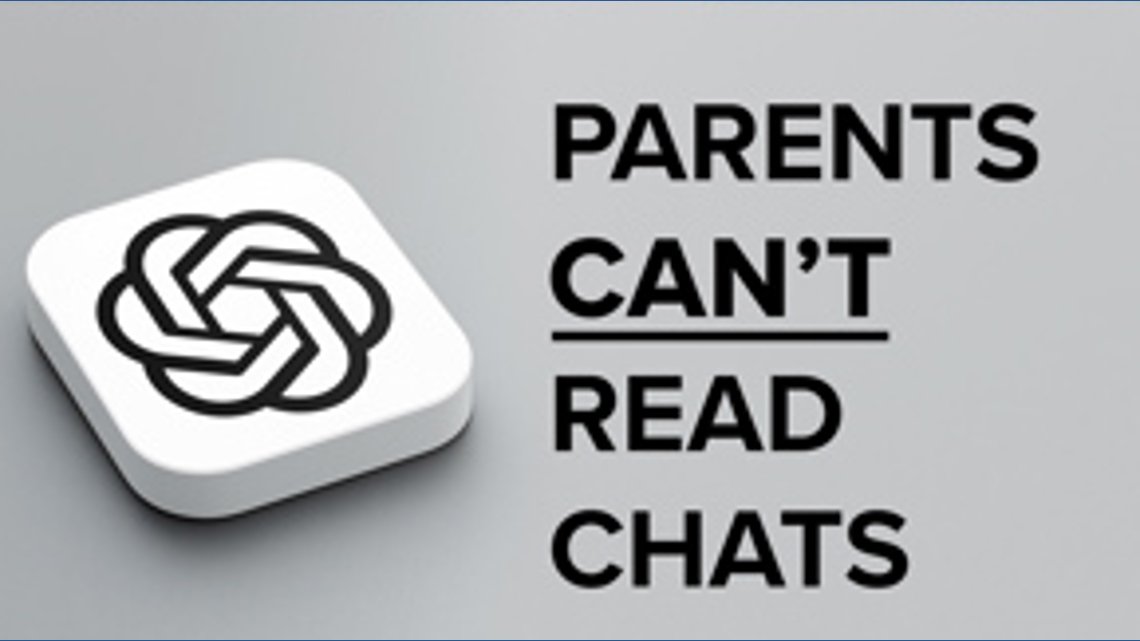
ChatGPT for Teens in 2026: What Parents Need to Know
Artificial intelligence is becoming part of everyday life for younger people.
Students use AI to understand difficult subjects, brainstorm ideas, learn languages, write code and explore new interests.
But increased access also creates an important question for parents:
How safe is AI for teenagers?
In 2026, OpenAI has continued expanding systems designed to provide age-appropriate experiences for teens, including age prediction, additional safeguards and parental controls.
This doesn't mean AI is completely risk-free.
Instead, it represents an attempt to make AI use more appropriate for younger users.
Why Are Teen AI Safeguards Important?
Teenagers interact with technology differently from adults.
An AI assistant can be incredibly useful for learning, but the same technology can also expose young users to inappropriate or harmful content.
OpenAI says its teen protections are designed to reduce exposure to areas such as graphic violence, risky challenges, sexual or romantic roleplay and unhealthy body-image content.
These protections are intended to create a safer environment while still allowing teenagers to use AI for learning and creativity.
How Does ChatGPT Know If Someone Is a Teen?
One of the major developments is age prediction.
OpenAI says ChatGPT can use signals associated with an account to estimate whether a user may be under 18. If the system predicts that someone may be under 18, it can apply the teen experience and additional safeguards.
The system isn't perfect.
OpenAI acknowledges that age prediction can sometimes make mistakes.
Adults who are incorrectly placed into the teen experience can verify their age to have the additional teen protections removed.
What Can Parents Control?
ChatGPT also offers parental controls that allow a parent or guardian to connect their account with a teen's account.
Depending on the available settings, parents can manage things such as:
- Sensitive-content protections
- Quiet hours
- Selected feature access
- Certain safety notifications
Importantly, parental controls do not allow parents to simply read all of a teen's conversations.
This is an important distinction.
Parental controls are designed to provide safety controls without turning ChatGPT into a complete conversation-monitoring system.
Should Parents Allow Teenagers to Use AI?
There isn't a simple yes-or-no answer.
AI can be an incredibly powerful educational tool.
A teenager can use it to:
- Understand mathematics
- Practice languages
- Learn programming
- Explore science
- Brainstorm projects
- Prepare for exams
- Improve writing
- Learn new skills
But parents should also teach teenagers that AI can be wrong.
An AI answer should not automatically be treated as fact.
The Biggest Mistake Parents Can Make
The biggest mistake isn't necessarily allowing AI.
It's allowing teenagers to use AI without teaching them how to use it responsibly.
Parents should talk to teenagers about:
- Privacy
- Personal information
- Misinformation
- AI hallucinations
- Academic honesty
- Online safety
- Emotional dependence on technology
AI should be treated as a tool.
It shouldn't replace teachers, parents, friends or real-world relationships.
What Should Teenagers Never Share With AI?
Teenagers should be taught not to casually share highly sensitive personal information.
That can include:
- Passwords
- Financial information
- Private identification documents
- Exact home addresses
- Other people's private information
- Sensitive personal details
The general rule should be:
If you wouldn't post it publicly, think carefully before putting it into an online service.
AI Should Be a Learning Tool
The most positive way to use AI is as a learning assistant.
Instead of:
"Do my homework."
A student could ask:
"Explain this concept to me like I'm a beginner."
Instead of:
"Write my essay."
They could ask:
"Help me create an outline and explain what I should research."
That difference can turn AI from a shortcut into an educational tool.
Final Thoughts
AI is going to be part of the next generation's education and careers.
Trying to completely separate teenagers from AI may not be realistic.
A better approach is to teach them how to use it safely, critically and responsibly.
OpenAI's current systems are designed to provide additional protections for younger users, but no automated safety system is perfect.
Ultimately, technology works best when good tools are combined with good judgment.


Comments (0)
Login to leave a comment.
No comments yet. Be the first to comment!