
Introduction
Starting a podcast can seem much more complicated than it actually is.
There are microphones to compare, recording software to understand, hosting platforms to choose, cover artwork to create, and distribution channels to consider. For a beginner, all those decisions can make it tempting to keep planning instead of actually recording.
The good news is that you can start small.
Current 2026 podcasting guides consistently emphasize the same basic sequence: define a clear concept and audience, choose a repeatable format, get appropriate equipment, record and edit your first episode, select a hosting platform, distribute the show, and promote it.
The most important decision is not which microphone you buy.
It is what your podcast will consistently deliver to its listeners.
1. Choose a Specific Podcast Topic
Start with a topic you can discuss repeatedly.
"Business" is a huge subject. A more focused concept could be:
-
Small-business marketing
-
Freelancing for beginners
-
Technology for nontechnical professionals
-
Interviews with local entrepreneurs
-
Career advice for young professionals
-
Online business in Pakistan
A focused topic makes it easier for potential listeners to understand why they should subscribe.
Ask yourself three questions
Before recording anything, answer:
-
What is my podcast about?
-
Who is it for?
-
What will listeners get from every episode?
If you cannot answer these questions clearly, refine the concept before buying equipment.
2. Choose Your Format
There are several common podcast formats.
Solo
You are the primary host and present the episode yourself.
Advantages:
-
Simple scheduling
-
Complete creative control
-
No guests required
Interview
You bring guests onto the show.
Advantages:
-
Different perspectives
-
Guest expertise
-
Opportunities to reach new audiences
Co-hosted
Two or more regular hosts discuss a topic together.
Advantages:
-
Natural conversation
-
Multiple perspectives
-
Shared hosting responsibilities
Choose the format you can maintain consistently.
3. Decide on an Episode Structure
A repeatable structure makes production easier.
For example:
Opening — 1–2 minutes
Introduce the topic and explain why it matters.
Main discussion — 20–30 minutes
Cover the core subject.
Practical takeaway — 5 minutes
Give listeners specific actions they can take.
Closing — 1–2 minutes
Summarize the episode and tell listeners what to do next.
You can change the structure later. The important thing is to make it easy to reproduce.
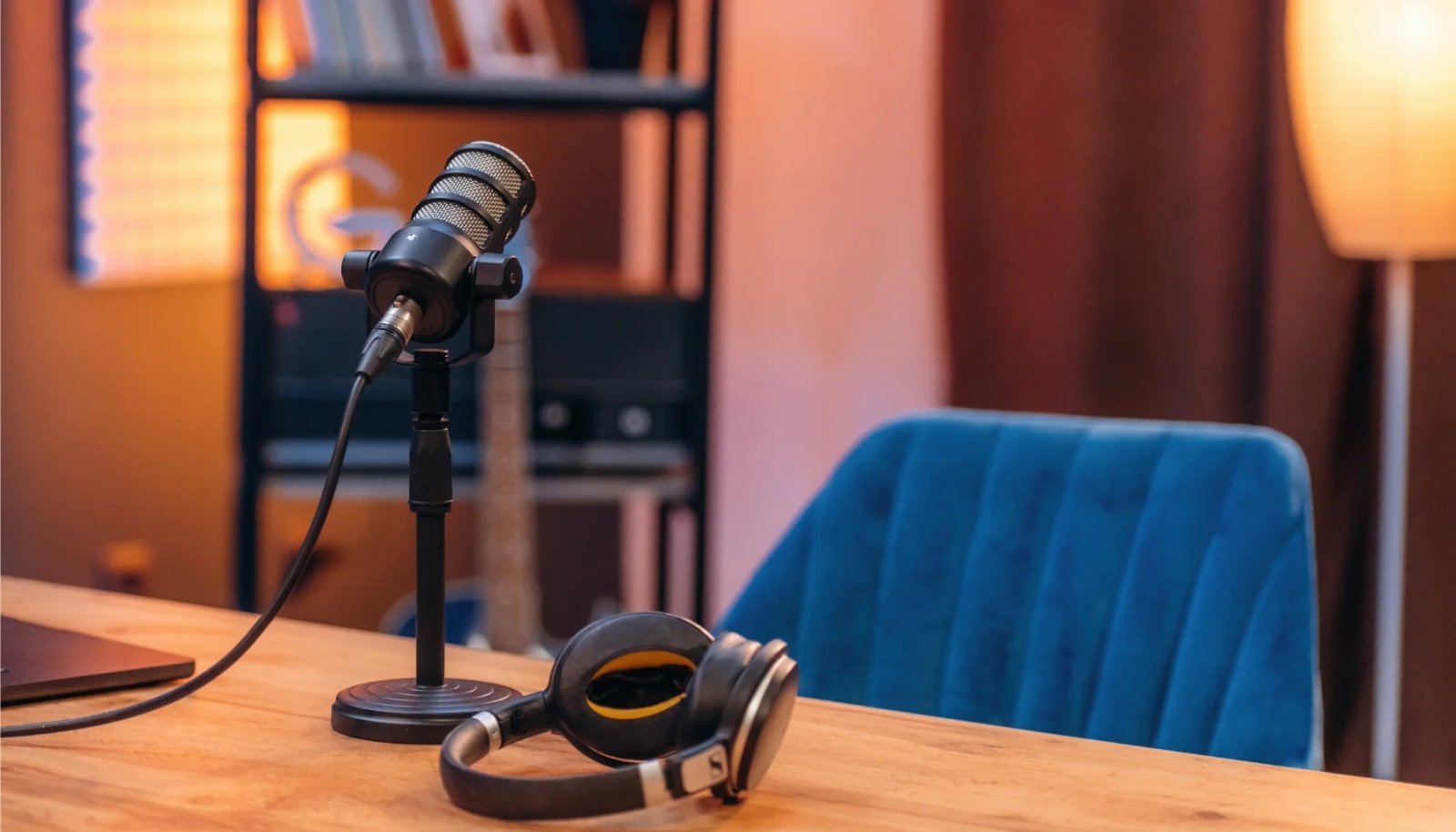
4. Start With Basic Equipment
You do not need to build a professional recording studio before publishing your first episode.
A basic setup can include:
-
A decent microphone
-
Headphones
-
A computer or suitable recording device
-
Recording/editing software
-
A quiet room
Current beginner podcasting guides emphasize that clear audio and a practical workflow matter more initially than building an expensive studio.
Focus on your recording environment
Even a good microphone can struggle in a poor environment.
Try recording in a room with:
-
Limited outside noise
-
Minimal echo
-
Soft furnishings
-
Doors and windows closed
-
Fewer electronic distractions
5. Choose Recording and Editing Software
Your recording software needs to let you capture clear audio and make basic edits.
At the beginning, you mainly need to be able to:
-
Record
-
Remove mistakes
-
Cut long pauses
-
Adjust volume
-
Export the final audio
Do not spend weeks learning advanced audio production before publishing your first episode.
Learn what you need for the current episode.
6. Record a Test Episode
Before recording your official first episode, create a short test.
Record two or three minutes.
Listen carefully.
Check:
-
Is your voice clear?
-
Is there background noise?
-
Is there echo?
-
Is the volume consistent?
-
Are you speaking too quickly?
-
Does the microphone sound natural?
Fix obvious problems before recording the complete episode.
7. Prepare Your First Episode
You do not necessarily need a word-for-word script.
Depending on your format, an outline may be better.
For example:
Episode: How to Start Freelancing
-
Introduction
-
What freelancing actually means
-
Choosing a service
-
Finding your first client
-
Common beginner mistakes
-
Three actions listeners can take
-
Conclusion
An outline helps you stay focused while allowing the conversation to sound natural.
8. Edit for Clarity
Your first edit does not need to sound like a major broadcast production.
Focus on removing:
-
Major mistakes
-
Long awkward pauses
-
Unnecessary sections
-
Repeated statements
-
Distracting background sounds
Avoid editing every tiny imperfection out of your voice.
A podcast should sound polished enough to be enjoyable, but it should still sound human.
9. Choose a Podcast Hosting Platform
A podcast host stores your episodes and generates the RSS feed used to distribute your show to podcast directories.
When comparing hosting services, consider:
-
Storage limits
-
Distribution features
-
Analytics
-
Pricing
-
Monetization options
-
Ease of use
Your host should make publishing and managing episodes straightforward.
10. Create Your Podcast Identity
You need a recognizable identity.
Start with:
-
Podcast name
-
Cover artwork
-
Short description
-
Host name
-
Consistent visual style
Your podcast name should be easy to understand, remember, and search for.
Avoid making it unnecessarily complicated.
11. Publish Your First Episode
Once your episode is ready, upload it through your podcast hosting platform.
You will generally need:
-
Episode title
-
Description
-
Artwork
-
Episode audio
-
Relevant category
-
Explicit-content setting where applicable
Your hosting service can then distribute the show through supported podcast platforms.
Do not wait until everything feels perfect.
Publishing gives you something real to improve.
12. Plan Several Episodes Before Launch
One useful strategy is to prepare multiple episodes before publicly launching.
This gives you breathing room.
Instead of finishing one episode and immediately worrying about the next, you can establish a small production buffer.
A practical starting point is to have several episodes planned or partially prepared before launch. Some current podcasting guidance specifically recommends preparing three or more episodes as part of a launch strategy.
13. Promote Every Episode
Publishing the podcast is only half the job.
Turn each episode into additional content.
For example, one podcast episode can produce:
-
Short video clips
-
Quote graphics
-
Social media posts
-
A blog article
-
An email newsletter
-
Short educational posts
-
Audiograms
This gives you multiple opportunities to reach people who may never discover the original podcast episode.
14. Focus on Consistency
Podcast growth usually requires patience.
Do not judge your entire idea after two episodes.
Instead, commit to a realistic schedule:
-
Weekly
-
Every two weeks
-
Twice per month
Choose the schedule you can maintain.
Consistency is more valuable than promising daily episodes and abandoning the project a month later.
15. Improve Using Listener Feedback
After publishing several episodes, look for patterns.
Ask:
-
Which topics attract attention?
-
Which episodes generate discussion?
-
Where do listeners stop listening?
-
Which guests perform well?
-
Which promotional clips perform best?
Use those observations to improve future episodes.
Your podcast can evolve as you learn what your audience actually wants.
A Simple Podcast Launch Plan
Week 1: Plan
-
Choose the topic.
-
Define the audience.
-
Select the format.
-
Name the podcast.
-
Outline the first episodes.
Week 2: Prepare
-
Buy or select basic equipment.
-
Set up your recording environment.
-
Create cover artwork.
-
Record a test.
-
Record your first episodes.
Week 3: Produce
-
Edit the episodes.
-
Write descriptions.
-
Set up podcast hosting.
-
Prepare promotional material.
Week 4: Launch
-
Publish the podcast.
-
Promote the first episodes.
-
Share clips.
-
Ask for feedback.
-
Start preparing the next episode.
Key Takeaways
-
Start with a specific concept.
-
Define your audience.
-
Choose a format you can sustain.
-
Do not overspend on equipment initially.
-
Prioritize clear audio.
-
Record a test before your first full episode.
-
Use an outline or script depending on your format.
-
Choose a reliable hosting platform.
-
Prepare multiple episodes when possible.
-
Repurpose each episode into additional content.
-
Stay consistent and improve based on feedback.
Conclusion
Starting a podcast in 2026 does not require a professional studio, a huge team, or years of technical experience. The basic process is straightforward: choose a focused idea, understand your audience, record useful episodes, publish them through a hosting platform, and keep improving.
The biggest obstacle for many beginners is not technology. It is waiting until everything feels perfect.
Start with a clear concept, basic equipment, and a realistic publishing schedule. Your first episode will teach you more than another month of researching microphones.




Comments (0)
Login to leave a comment.
No comments yet. Be the first to comment!